This self-referential page documents technical work on this website. For the actual content, have a look at the home page.
2022: The original content wind page
After having been in touch with web development for over half a dozen years, I decided to finally build a website for myself to collect all the various public things I’ve been working on in a single space. I had thought about different design ideas for my website for a long time but since I’ve never found the time to fully prepare those first, I chose to build on top of an existing solution as a start. As I had been experimenting with Nuxt for a while, I created my site based on the Nuxt creator’s content-wind template which was built on Nuxt Content and TailwindCSS.
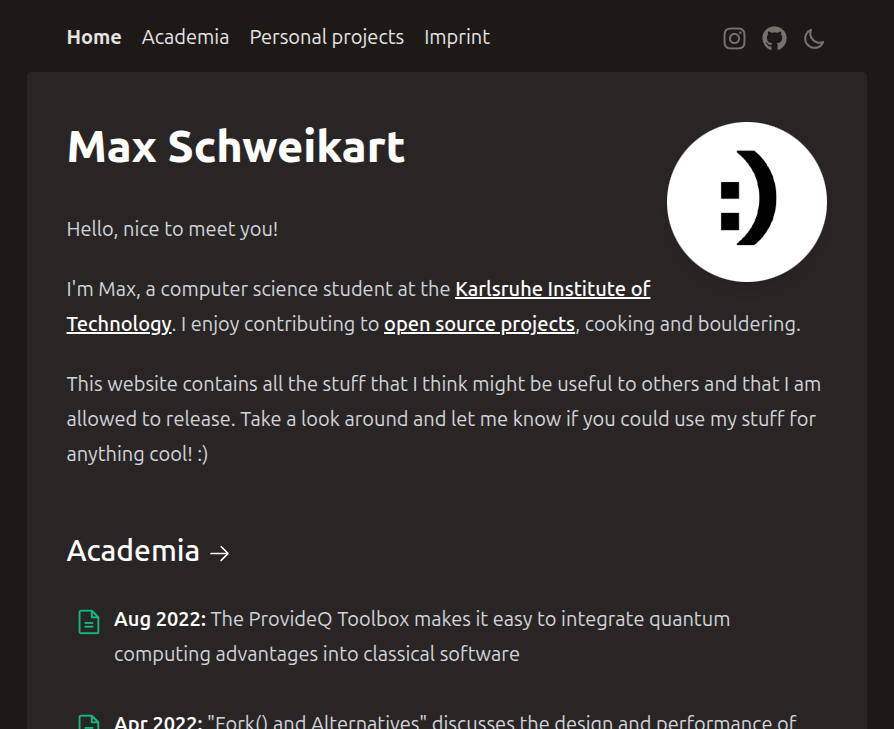
Fig. 1: The first iteration of this website was pretty minimal,
consisting of only four pages.
2026: Switching to Quartz
With some free time at hand after graduating from my master’s degree, I gave this website a direly needed overhaul. The content of this site hadn’t been updated in over three years, a period in which a lot has changed in my life.
But when an npm security audit revealed 171 vulnerabilities 1 among the many outdated dependencies of the project, I wanted to give the site a technical upgrade first. However, that turned out to be difficult since Content Wind is distributed as a template without an upgrade mechanism. Upgrading all individual dependencies to their latest version didn’t work out either (it never does) with the project being unable to start afterwards and the looming time investment required for working through roughly a dozen upgrade guides for a foreign codebase seemed out of balance for this hobby project.
I had been on the lookout for a better markdown-based website template for a while and when I came across Mario Román’s homepage while researching PhD positions, it clicked. Mario’s site was based on Quartz, which reminded me a lot of Obsidian and Notion thanks to its knowledge graph and its minimal layout. Quartz supports many of the features I had missed on my own site out of the box including full-text search, tagging and the general organisation into pages.
Reorganising my content to fit Quartz’s structure didn’t take long and I could quickly shift my focus towards writing new content. So far, I love the rich feature availability that makes the website feel clean and modern while sticking to standard markdown2 for content authoring. While I appreciate Quartz’s built-in update mechanism, I would prefer to separate the site generator from the actual content. We’ll see how that plays out.
- 👀 Take a look at the home page
- 🏗️ Find the source code on GitHub
- 📧 Tell me what you think about this site
Footnotes
-
NPM’s audit functionality has been criticised in the past because it can’t assess whether vulnerable dependencies are relevant in the context of the actual project. Many of the 171 reported vulnerabilities were indeed irrelevant to the website code but the sheer number prevented me from carrying out a proper assessment in this side project. As the number of reported vulnerabilities roughly correlates with the outdatedness of the project’s dependencies, I still believe it to be a sensible first indicator of technical debt. ↩
-
Quartz’s markdown support actually goes beyond standard markdown, including features like callouts/notes and LaTeX support from Obsidian and GitHub flavoured markdown. ↩